Up next in 10


Subscribe: https://bit.ly/28Kc0Cd
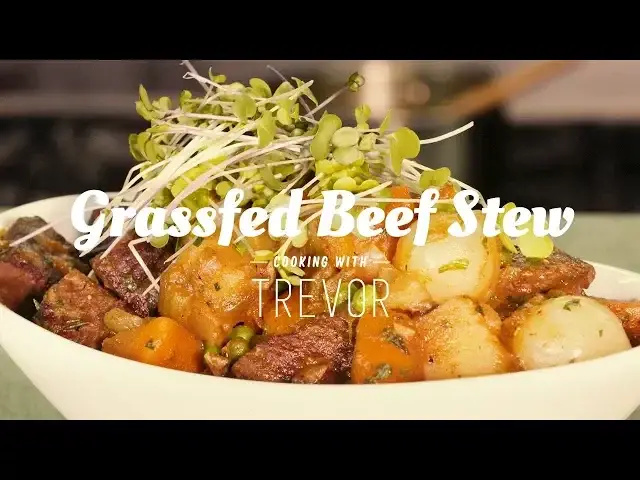
Nothing screams healthy comfort food like grass-fed beef stew! And on this episode of Cooking with Trevor, chef shares some tricks of the trade for a perfect bowl of this tasty stew. Enjoy!
⏩More Info: ⏪
Like us on Facebook: https://www.facebook.com/theheartysoul
Website: http://theheartysoul.com
Show More Show Less View Video Transcript
0:00
Hey everybody, Chef Trevor here, Chef de Partie of Benchmark Restaurant at the Canadian Food and Wine Institute
0:05
And we're here at Winekeller Restaurant again today, and we're going to be making some grass-fed beef stew
0:10
You're probably thinking to yourself, why am I using grass-fed beef? What's the difference
0:33
We're really in a health-conscious world today, and grass-fed beef is the natural way that cows eat
0:38
Corn and grains is something that we've decided as factory farmers that we're going to feed our cows to make them plumper and more muscular faster
0:45
But the reality is, if we want a more sustainable beef product, and we care about how our cow was raised, we are going to use grass-fed beef
0:53
So what I have here today is Sterling Silver, which is a brand of grass-fed sirloin roast
0:59
And what we've done is cut it into even cubes, because like I always say, if you're going to do something, you always have to cut it evenly so that it cooks evenly
1:08
First thing we need to do today to get our stew ready is season and sear the meat
1:13
And the common misconception that everyone always does when they're searing is they're going to take all this meat, and they're going to throw it all into that small pan
1:21
And that's bad, because we're actually going to start stewing that meat and giving it this awful gray color that looks like something you really overcooked or mom's old meatloaf
1:31
But what we want is a beautiful caramelized browning on the outside
1:35
So we're going to season and sear this meat in stages. To do that, we're only going to use salt
1:42
And remember, because we have to layer flavor, it's okay to be liberal at this point with your salt and pepper
1:49
Using our lovely hands, we just want to kind of massage that seasoning into the beef
1:54
So we're going to put some of that into the bottom of our pan. And we really want the pan to get super, super hot here, because we want the beef to start caramelizing and coloring right away
2:04
We're going to take our beef to our super hot pan, and we're going to sear in stages
2:08
Have a little bit of patience. Maybe have a glass of wine while you're doing it, and sear it in stages, okay
2:14
And what I mean is, when we get it in that pan and it starts to sear, we want lots of space in between the pieces
2:21
It's going to take you about two or three times to sear all of this meat
2:26
We're going to take a clean plate, and we're going to line it with paper towel to drain off any excess fat that's coming off of that meat
2:34
And we need to have patience during this point. We can't just go and flip, or else the beef will stick to the bottom of the pan, and it'll end up tearing it
2:42
What we're looking for is when we turn it over, it's got that beautiful caramelized sear on the outside, okay
2:49
That's what we want. As soon as both sides have that color, you take your first batch out, and you let it drain on the paper towel
2:56
Now, when you're doing this at home, a good rule of thumb is open every window, open every door in your house
3:01
because you will set off every single fire alarm in your house if you don't
3:06
Okay, we're just going with stage two. It needs that amount of high heat to create that caramelization on the outside
3:13
And what's actually happening there is the protein strands in the meat
3:17
we're actually burning or cauterizing the outside of them in a reaction called the Maillard reaction
3:24
And what that does is it initializes a first stage of flavor
3:28
And that's what we're looking for here for a depth of flavor in our stew
3:32
So, our beef is beautifully seared. It's got that gorgeous brown color on both sides
3:37
We're just going to set that aside, let it drain on the towel for a minute
3:41
and we're going to start building the base of our stew. Now, the first step of that, don't wash this pot
3:46
We want every little bit of flavor from the searing of that beef that we got in there
3:51
So we're just going to turn it on to a medium-low heat. We're going to add one more tablespoon
3:56
Then we're going to add in one onion that I've just peeled and diced
4:01
We're going to put that in. Next, I've got three ribs of celery that I've just done the same large dice to
4:09
Okay, that goes in the pot as well. Now, you're probably saying to yourself, Trevor, you've got all these other ingredients here too
4:15
Why aren't you throwing them in at the same time? And the reason is, when we build a stew, we are building layers of flavor
4:21
So, if we were to put all of these ingredients in at the same time, we wouldn't get the beautiful taste from the caramelized onions and celery that we want
4:28
We wouldn't get the taste of the beautiful caramelized beef that we want
4:32
And our carrots and our potatoes would overcook and become mush in the stew
4:36
by the time the beef is done cooking. So we do things in stages to build flavor and end up with a gorgeous final product
4:43
We're just going to give that a stir. And we're going to try and scrape all of that beautiful caramelized beef that we want
4:51
And we're going to try and scrape all of that beautiful beef goodness off the bottom of the pan
4:56
Once our celery and onions have reached this point where they've sucked up all of the awesome brown bits from the bottom of the pan
5:03
we are going to add two tablespoons of tomato paste. It's going to give us that rich, meaty tomato flavor
5:13
Let that toast for a minute because tomato paste itself from the pan is actually a little bit bitter
5:19
Toss that around until it coats the onions and the celery nice
5:23
And you get a little bit of this tomato paste sticking to the bottom of your pan
5:28
Alright, now the alcohol. The next best part. Today I'm using a very dry red wine
5:33
So if you're drinking a Merlot or a Cab Franc when you're eating dinner
5:37
just remember to save a little cup of that. Not for yourself, but for the stew
5:41
As well, if you don't want to use wine, you can just as easily replace this cup of wine with a cup of stout beer or an ale or a really rich cider
5:51
I'm using wine today because I love the flavor that it lends to the beef. But it's completely up to you
5:56
But just use one cup of alcohol. And we just want to pour that in
6:03
And really vigorously scrape that tomato paste off of the bottom so it all of a sudden turns this beautiful, rich brown color
6:11
And we just want to work again to make sure we're scraping all of that awesome goodness
6:17
from the tomato paste off of the bottom of our pan. We are then ready to add our beef back in
6:23
And we're just going to take it all at once at this point. We're just going to let it fall right into our stew
6:33
And at this point we are going to add three carrots. I've just peeled them and chopped them
6:39
And I've done a nice triangle cut on them. That's my prerogative. That doesn't have to be your prerogative
6:45
Just remember my one rule. They've all got to be the same size
6:49
In go the carrots. And the same thing, I've got two russet potatoes that I've peeled, washed, and just diced into even-sized cubes
7:03
I'm just going to put all that in the pot. And then to finish off, I'm taking three cups of low-sodium beef stock
7:11
I'm just going to add that in. And it's going to be the final piece to this puzzle
7:18
It should come up just about covering everything. You want to give everything a nice stir around so it gets happy in there together
7:26
And now what we want to do is bring that pot up to a nice simmer
7:30
And then turn the heat down to low. And we want to let it simmer for two hours
7:39
We've been letting it simmer nicely now for two hours. It's gotten rich and deep and full of flavor from building all of those layers
7:47
But to finish it off and take it over the top, we're just going to add in a few simple garnishes
7:52
And the first garnish here is a little trick I like to use all the time
7:56
It'll offer a little bit of sweetness and sourness. It's pickled cocktail onions
8:01
I tend to go for the sweet ones because they're going to offer a really awesome flavor characteristic to our stew
8:07
Everyone's going to go, what is that? And we're just going to add those in
8:12
Then we're going to add in three quarters of a cup of green peas
8:16
And to round out the herb flavor, I've got six stalks of parsley
8:21
And ten sprigs of thyme that I've just chopped nicely in the bowl here
8:25
Just going to add that in. And of course, because we have been building layers of flavor, we want to finish off one more time with a final round of salt and pepper
8:36
So we're just going to stir all that through. And we can see that that sauce has gotten nice and glazed and thick
8:43
And we're ready to go to the plate. All I've got to start off in the bottom of my bowl is one cooked cup of plain white rice
8:50
And we're just going to place our stew right on top of that
8:54
Making sure we get all of that meaty goodness. And we want to work quickly here
8:59
We want to do this as soon as it comes off the heat so that when our guests see it at the table
9:04
they get some of those bright green peas and they haven't turned all army green yet
9:09
And because I can, I'm just going to finish off with a few sprouts of micro onion
9:16
Just to bring that heat and crispness of onion right into the final dish
9:21
And there you have it. Stick to your ribs good, grass fed beef stew. Enjoy
9:51
For more information, visit www.FEMA.gov
#Cooking & Recipes
#Soups & Stews
#Food
#Meat & Seafood
#Culinary Training
#Herbs & Spices