Up next in 10


Subscribe: https://bit.ly/28Kc0Cd
⏩More Info: ⏪
Like us on Facebook: https://www.facebook.com/theheartysoul
Website: http://theheartysoul.com
Show More Show Less View Video Transcript
0:00
Now I'm going to do a dairy free Alfredo
0:21
For this dish we are going to use the same brand of Gogo quinoa pasta, but we're using
0:26
kind of a red and white quinoa mix here of a little what we call fusilli
0:32
So it's almost like penne, but it's got a little bit of a twist to it
0:35
We'll also be using some sliced red onion. And I'm just in the process of cleaning my mini mushrooms that are going to go into that dish
0:44
So the reason I like the minis is because we have to do minimal chopping if we're in a hurry
0:48
When mushrooms are harvested, they are cleaned, but there is sometimes a little bit of residual
0:53
dirt that is left on them from their growing stage. And you just want to remove that
0:58
The worst thing you can do to a raw mushroom is soak them and submerge them in water because
1:03
characteristically mushrooms are like a sponge. You will need between six and eight mini button mushrooms for this dish depending on size
1:12
And they must all be cleaned. For those mushrooms, all we're going to do is make two cuts
1:19
We're going to cut the mushroom in half, and then we're going to cut the mushroom in half one more time to create these little kind of neat, funky mushroom quarters
1:29
And what that's going to do is it's going to give us the appeal of meat from the umami
1:33
flavor in the mushrooms without having to add something like chicken or shrimp or beef
1:37
to the pasta dish. Very important here that you're taking your time and cutting the mushrooms all the same size
1:44
If we cut the mushrooms different sizes, they're going to cook at different rates and it's going to offer varying textures in our pasta
1:50
And that's something we want to avoid. Also for this dish, we're going to go back to our trusty spinach one more time and our
2:01
mini tomatoes fresh from the season. We're just going to take our cherry tomatoes and we're going to just slice them in half
2:12
We need one more clove of garlic using our trusty microplane to mince one more time
2:21
For this dish today, in order to keep it non-dairy, we're working with a new product I like to
2:25
use called Ripple. The interesting thing about this product is it's actually a new technique that allows
2:30
the extraction of milk from peas. And the good part about using the milk from peas is that you don't get that characteristically
2:36
chalky flavor that you might find in a soy-based beverage or a nut-based beverage
2:41
So what we're going to get here is that silky appeal of using cream, but we're actually
2:46
using a non-dairy milk product. We're going to use two cups. The reason we need so much is because we're actually going to use this milk to cook the pasta
2:56
We're going to make everything all in one pot. And what that's going to do is allow the starch of the pasta to thicken our sauce
3:04
So to start this dish, we're going to take our frying pan. We're going to go to a medium heat
3:09
Our extra virgin olive oil goes into the pan. For this dish, we need about two tablespoons
3:16
The difference in this pasta is we're not going to add the garlic right away to flavor our oil
3:20
We want the fresh flavors of the garlic to penetrate the sauce
3:24
So we're going to add that after we saute our vegetables. So once our oil starts to bubble, like you can see here, it's bubbling but it's not smoking
3:32
and it's coating the pan very nicely. We're going to add in our red onions, okay
3:37
In the pan they go. And we just want to break up those onions and start getting them to saute
3:44
If you notice, the onions are starting to fry rather than saute
3:49
Just back the heat off a little bit. Once the onions kind of start to lose their bright purple color and start to go see-through
3:56
we're going to take our beautiful quartered mushrooms and we're going to add those in
4:01
You're going to notice as you cook the mushrooms, they're going to release a liquid
4:04
As soon as that liquid is released, that's when we're going to add our initial layer of seasoning
4:10
If we were to add salt right now to these mushrooms, all we would do is draw out the moisture
4:14
What we want is the heat to start drawing out that liquid in those mushrooms
4:19
So that way we season the liquid that comes out that can then flavor our sauce
4:27
And if you're brave, you can give it a couple tosses or you can use your wooden spoon and
4:31
just stir it around. You just want everything to saute nicely and cook without getting that caramelized, burnt
4:39
flavor to it. We're starting to get a little more moisture come out of our mushrooms here
4:43
That is the perfect time to add our first round of salt, just a little bit, and pepper
4:51
I'm generous with seasoning because I like the balance that it gives and I don't like
4:55
to add seasoning at the end of my dish. Seasoning is completely up to you
5:00
You put as much or as little salt and pepper in as you want and let the vegetables do the work
5:06
So a general rule here, I want to continue when I can start to smell the onions
5:11
I can smell the onions starting to take on that sweeter aroma, which lets me know that
5:16
that sharp onion flavor, that raw onion flavor, has been cooked out of the onions and now
5:21
they're starting to sweeten up. That's when we want to add the remainder of our ingredients
5:27
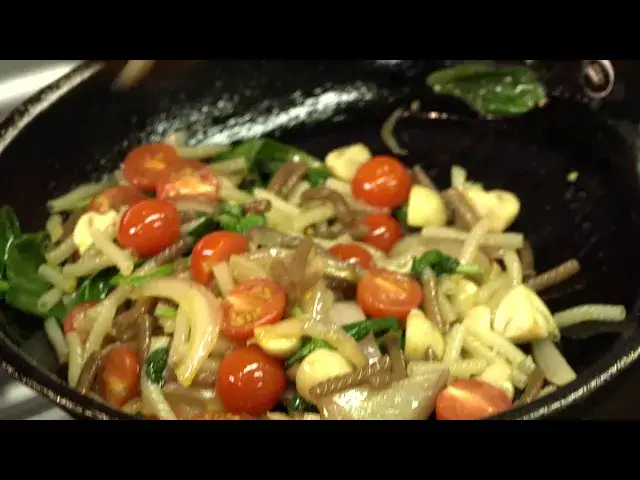
So we're just going to take our tomatoes. Just let them all get happy together
5:35
Add in our spinach. Just let that gently wilt for a second
5:41
And as you can see, you've already got some amazing, beautiful flavors happening in here
5:45
You've got the sweetness of the onion, the umami of the mushroom, you've got that acidic
5:49
bite from the tomatoes, and you've got that really fresh saltiness from the spinach coming through
5:54
Once all those get happy together in the pan and their flavors start to get together, we're
5:58
going to take our quinoa pasta and we're just going to add it right in
6:03
Let that get coated with oil, let it get coated with all those flavors
6:08
Like we said before, we only have one chance to season our pasta
6:12
We need to season it now before we add the milk so that the flavors penetrate the pasta
6:17
So just quickly coating that, making sure all the pastas have a little bit of a translucent
6:23
oil coating in there. That lets you know that all the flavors of those vegetables captured in that oil are
6:28
giving that pasta a nice flavor to start with. We're now going to take our garlic and add it in
6:33
Okay, because we want the freshness of the garlic in this dish
6:38
That's what characteristically makes Alfredo so good, is that fresh garlic flavor
6:42
Then we're going to take our ripple, and we're going to reduce that to a low simmer
6:53
And we're going to let the milk gently cook the pasta. And as the pasta cooks, we're drawing out that starch to help thicken the sauce, which
7:01
is what we would do characteristically if we were using cream. We're going to leave that to simmer for 15 to 20 minutes
7:13
So we're back. It's about 15 minutes later. You've noticed all the sauce has nicely reduced and coated itself around those noodles
7:20
The tomatoes have started to bust up and add their flavor into the sauce. The spinach is staying bright green, and those mushrooms are giving it that thick umami flavor
7:29
Before we go to the plate, there's two things I want to do to liven this dish back up
7:33
What I want to do is add an herb we call chives. Chives are a very, very, very fragrant, very delicate herb that have a very sophisticated
7:43
onion flavor to them. So all I want to do is just give them a nice quick chop, always discarding the ends and
7:50
trying your best to carefully cut those as thin as possible. At this point, we're going to turn our pasta off
7:58
Everything has come together really well. That pasta is cooked to a perfect al dente
8:03
We're removing that from the heat. We're just going to add our final layer of salt just to round out those flavors and just
8:11
a pinch of pepper. Then we're going to add in those chives that we just chopped at the very last second so
8:18
they stay bright and vibrant green and their fragrance penetrates the entire dish
8:23
Okay, we're just going to give that kind of a toss around
8:30
We're just going to take that pasta. We're going to spoon it into our vessel
8:39
Noticing here with this pasta, as with the rest of the pastas we did today, nothing is
8:43
swimming in sauce. What we have is just a nice coating of sauce on the outside of the pasta
8:49
When we do the work to cook pasta properly, whether it's gluten-free, whether it's regular
8:55
pasta, we want it to be the star. So why are we going to drown it in tons and tons of extra sauce
9:02
We want that texture of the pasta to come through, that flavor of the sauce to come
9:07
through, but we don't want it swimming in sauce. There you have it, non-dairy Alfredo with mushrooms, spinach, and spring tomatoes, and
9:16
gogo quinoa pasta. Enjoy
#Cooking & Recipes
#Nutrition
#Kitchen & Dining